How to tell real wool from a blend before you buy it second-hand
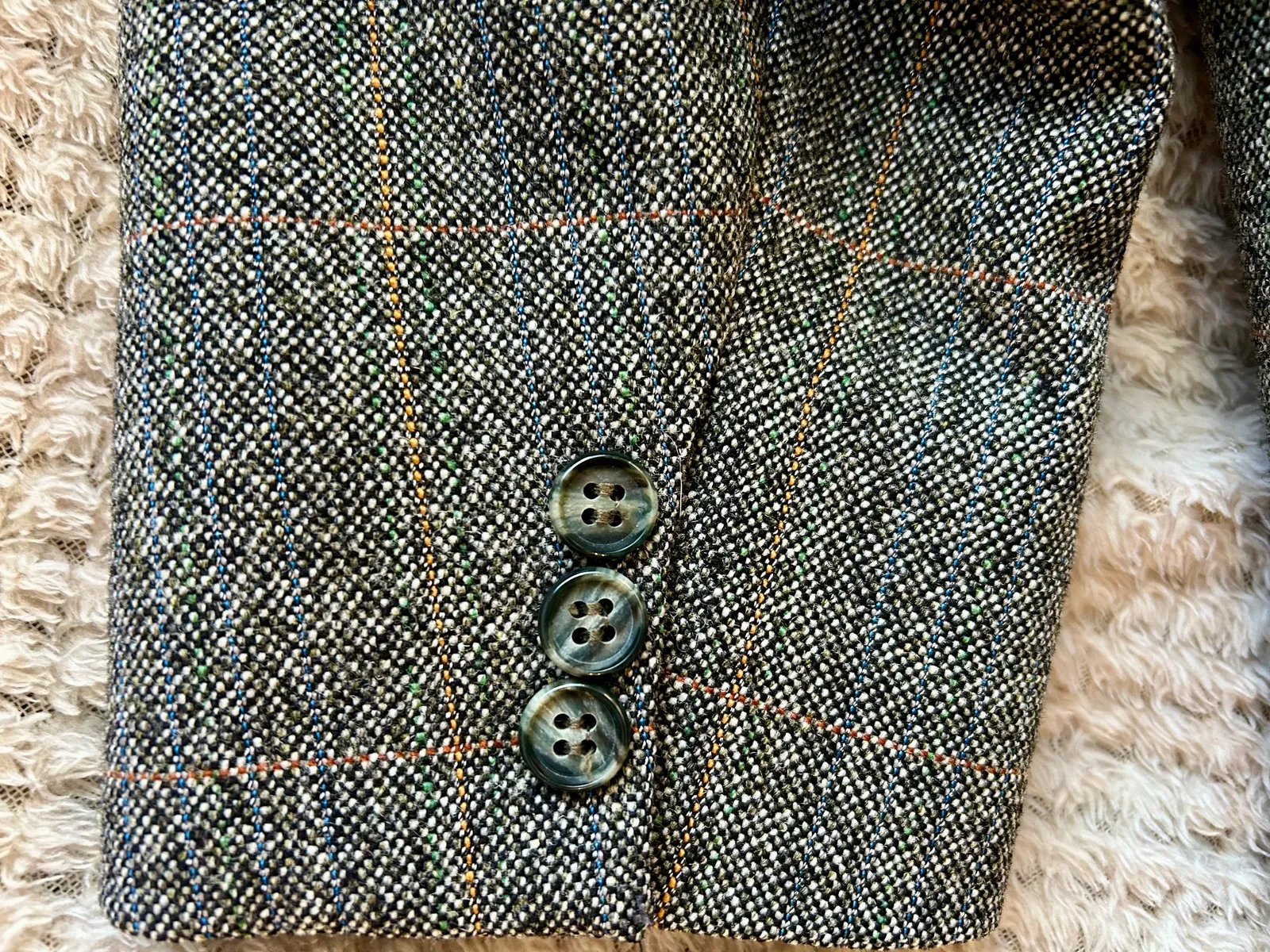

A good wool coat for a fraction of its price is what most of us are hoping to find on a charity shop rail in October. Plenty of what hangs there looks the part and turns out to be mostly acrylic. Here's how to tell the difference in about thirty seconds, label or no label.
Read the composition label first
It sounds obvious, but most people check the size label and stop. The fibre label is usually a separate tag, sewn into a side seam or further down the lining, and it's the single most useful thing on the garment.
It has to be there. UK rules require a fibre content label on clothing, and Trading Standards guidance on labelling textiles says second-hand clothes have to comply too, although nobody expects a pre-war handmade jacket to have one. So if a label has been cut out of something recent, I'd wonder why.
Three things to know when you find it:
- Fibres are listed in order of weight, biggest first, with percentages. A jumper labelled "60% acrylic, 30% wool, 10% polyamide" is an acrylic jumper with some wool in it, whatever the price tag says.
- "100%", "pure" and "all" mean one fibre only. The rules allow up to 2% of stray fibres that crept in during manufacture (5% for carded yarns), and that's it.
- Coats are labelled in parts. You'll see "Outer" and "Lining" listed separately. A viscose or polyester lining is normal and fine. What matters is the outer.
What the words actually mean
"Wool" on a label is a protected name. It means fibre from a sheep's fleece, or sheep's wool mixed with one of the fine animal hairs like cashmere, mohair, alpaca or camel, as set out in the list of permitted fibre names. It can't be stretched to cover anything synthetic.
"Virgin wool" or "fleece wool" is stricter. It's only allowed for wool that has never been in a finished product before, so no recycled fibre. It can also appear on a blend, as long as the virgin wool is at least 25% of it, so still check the percentage.
"Wool-rich", "wool mix" and "wool feel" are a different matter. They're descriptions on swing tags and in listings, not names with a percentage behind them, and I can't find any rule that sets a minimum for "wool-rich". Ignore them and find the number.
Woolmark logos are the exception, because they come with a test. The plain Woolmark means pure new wool. Woolmark Blend means at least 50% new wool, and the Wool Blend mark goes down to 30%.
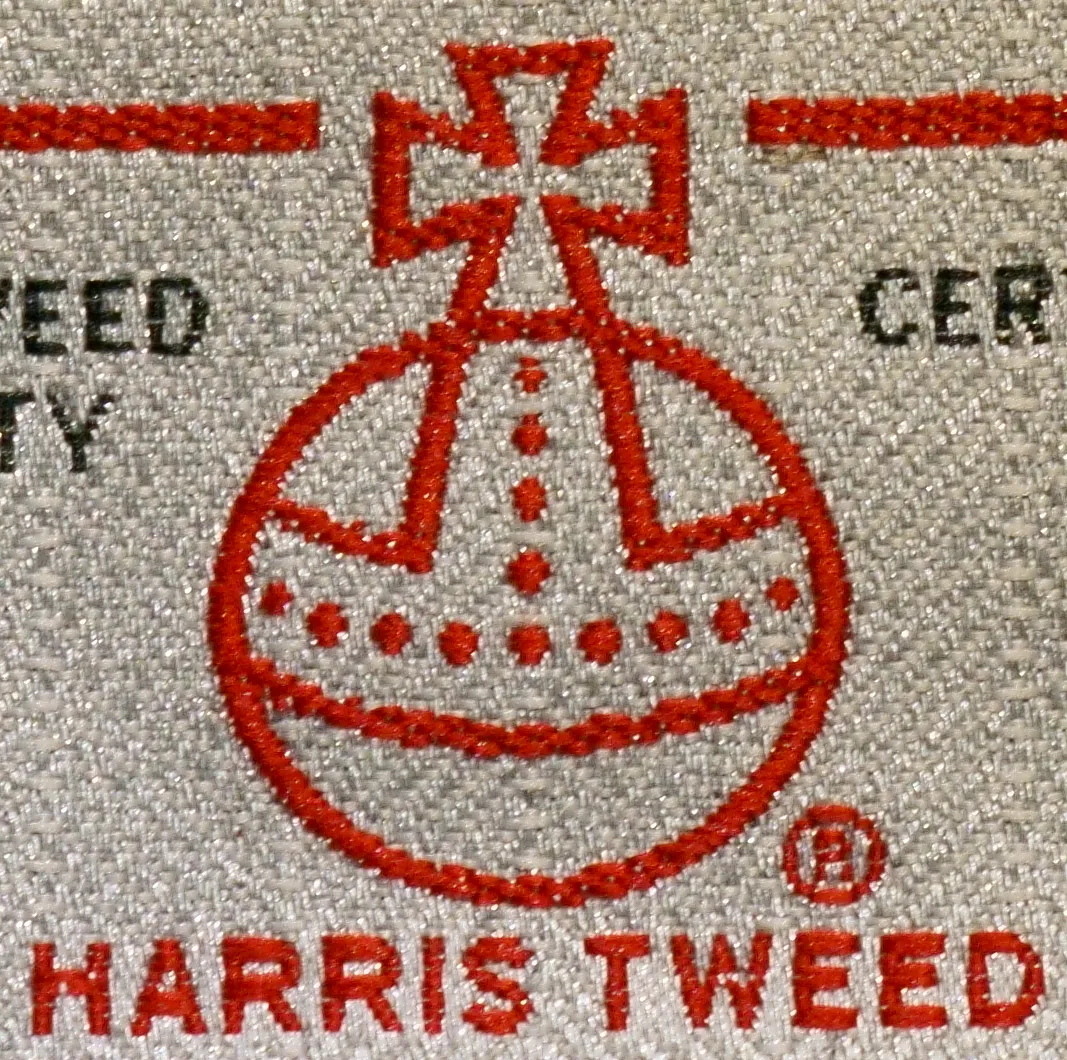
The Harris Tweed orb. Photo: Giftzwerg 88, CC BY-SA 3.0, via Wikimedia Commons.
The best label of the lot is the Harris Tweed orb. Under the Harris Tweed Act 1993, Harris Tweed has to be handwoven by islanders at home in the Outer Hebrides, from pure virgin wool dyed and spun there. If the orb's inside a jacket, the cloth question is answered.
When there's no label, use your hands
Old coats, homemade jumpers and anything with the tag snipped off need a different approach. None of these tests is perfect on its own, but put two or three together and you'll rarely be wrong.
Scrunch it. Grab a handful and squeeze it in your fist for a few seconds. Wool springs back and the creases drop out. Acrylic tends to stay crumpled or look a bit flat.
Look closely. Wool yarn has a slight fuzz and a natural unevenness to it. Acrylic often looks too uniform, with a slight sheen, especially in knitwear.
Feel it against your wrist. Acrylic has a slippery, slightly squeaky handle. Wool, even soft merino, has a bit of grip and a dry warmth to it. Cheap acrylic jumpers also tend to crackle with static when you pull them off the rail.
Check the pilling. Every knit pills eventually. On wool, the bobbles tend to sit loosely and come away with a comb. On acrylic and polyester they're anchored by stronger fibres and cling on, so a jumper covered in tight, hard little balls is a fair clue.
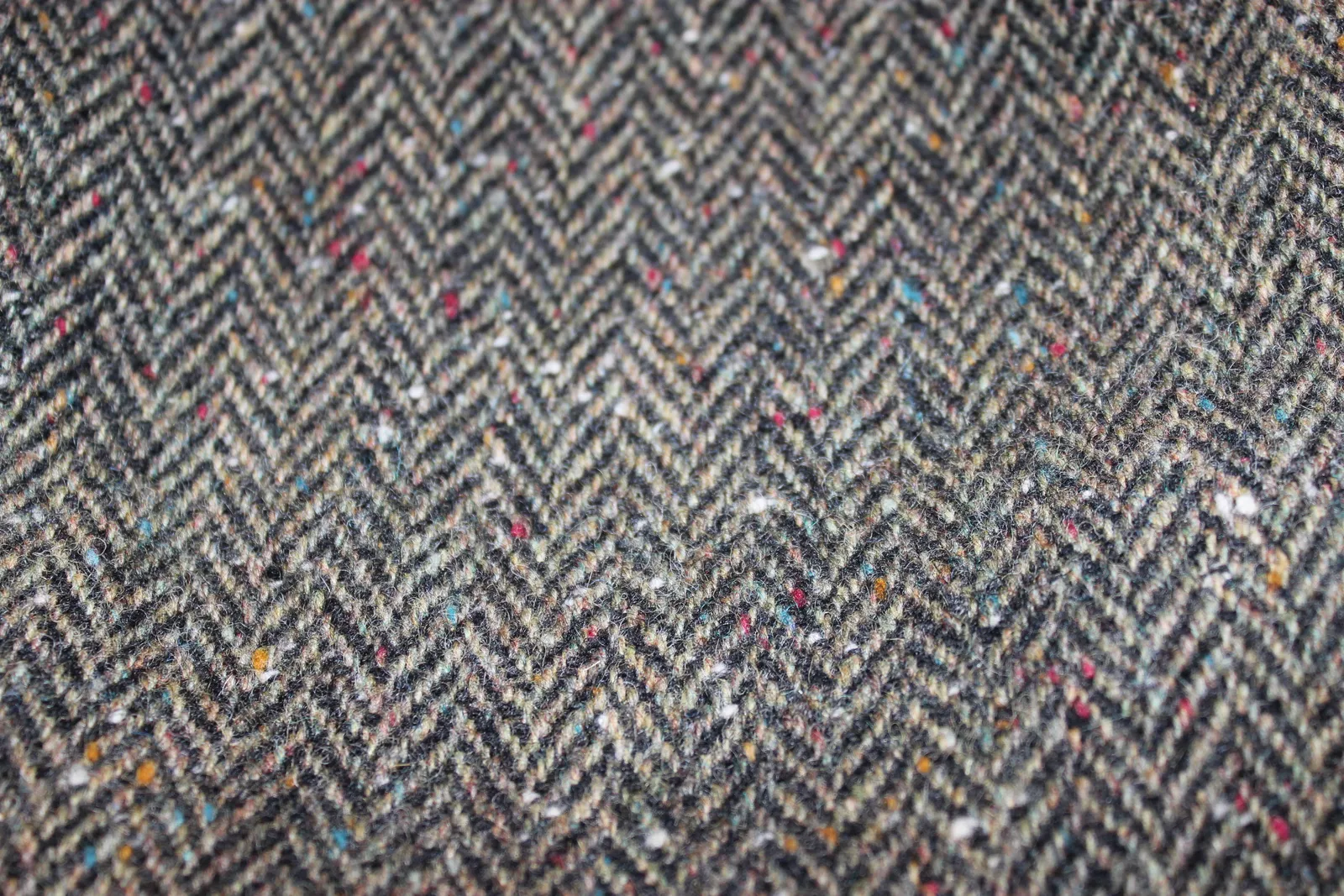
Donegal tweed, with the coloured flecks it's known for. Photo: Toxophilus, CC BY-SA 4.0, via Wikimedia Commons.
The burn test, at home, carefully
If you've bought something and want to be certain, the classic check is a burn test on a single thread. Pull one from inside a seam allowance where it won't show, hold it with tweezers over a sink, and touch it to a flame.
Wool burns slowly, smells like singed hair and goes out on its own once you take the flame away, leaving a dark ash you can crush between your fingers. Acrylic and polyester melt and shrink from the flame, give off a sharp chemical smell and leave a hard bead that won't crumble. A blend gives you a bit of both, which tells you it's a blend but not the ratio.
Obviously, don't do this in a shop.
When a blend is fine
Not every blend is a con. Some nylon (polyamide) in a wool coat outer makes it harder-wearing, and a sock with no synthetic in it wears through at the heel fast. A 70% wool coat with 30% polyamide is still a wool coat in every way you'd notice.
My rule is that wool should be the first fibre listed and at least half the total. Below that, you're paying for acrylic, and acrylic doesn't keep you warm on a wet bus stop the way wool does. Check the label on every coat and jumper you're tempted by, including the ones that look and feel right, because it takes ten seconds.
If you sell, put the exact composition in your listing and a photo of the label in the gallery. People search for "100% wool" and "lambswool" by name, and a clear label photo answers the question before anyone has to ask it.